New video guide to using SDR-Console with the SDRplay RSP family
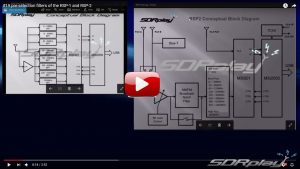
We have just released a new video guide showing how to use the popular SDR-Console V3 with the RSP1 and RSP2:
You don’t need to own an RSP from SDRplay to use SDRuno. Those people who already have an RTL-SDR dongle, can use our SDRuno software for free. So can owners of many other SDRs which support an EXT/IO interface. We’ve just released a new video guide to using the “SDRuno EXT/IO edition”:
Follow the link in the YouTube description to RadioforEveryone’s excellent guide to using SDRuno with other SDRs
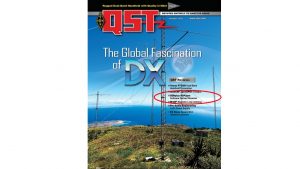
The latest QST magazine (October 2017) includes a detailed independent review of the performance of the RSP2pro. It tabulates extensive measurements from their dynamic testing and they summarize these impressive results saying that the RSP2pro has “A Lot of Capability in a Small Package”. QST magazine is available to all ARRL members. We hope to be able to reproduce their article here in the near future. Meanwhile, to find out more about QST magazine go to http://www.arrl.org/this-month-in-qst
Andrew Back, Director of the Free and Open Source Silicon Foundation has written a new review of the RSP2 for RS Components’ Design Spark Community Website. Andrew writes “The RSP2 (124-9619) from SDRplay bridges the gap between the popular RTL-SDR re-purposed TV tuner dongle that offers the very lowest cost SDR solution, and high-end platforms…”
You can read the review by clicking on the link below:
https://www.rs-online.com/designspark/rsp2-an-affordable-high-performance-sdr-receiver
Lucas Teske posted this GOES-13 image received during the 21st August eclipse using the RSP2 and XRIT Decoder.

To find out more about the Open Satellite project and how to receive these images using Lucas’ software – visit his site below:
SDRplay had the the pleasure of supporting DXers and shortwave listeners at the jubileum European DX Conference in Tampere, Finland last weekend. It was a great celebration, as this year was Finland’s centennial and the European DX Council’s 50th anniversary. The meeting was organized by The Finnish DX Association (soon to be 60 years old) and the local Tampereen DX-Kuuntelijat club who were celebrating their 50th anniversary.
Many thanks to Ismo Kauppi who hosted the session where we presented

In this video Mike demonstrates the VRX function built into SDRuno (multiple receive).
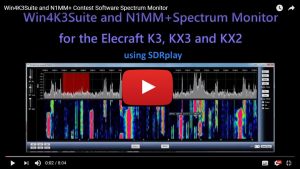
Tom, the author of Win4K3Suite has released a new version of Win4K3Suite which supports broadcasting of SDRplay data for use with N1MM+ Contest logging software and their new spectral display. He plans the Yaesu version to come out on Friday.
Take a look at the video on: https://youtu.be/_769Dli_lJo
To find out more about the N1MM+ Spectrum Display feature within the N1MM+ Logger – go to http://n1mm.hamdocs.com/
This week, here in the UK, The RSGB plays host to YOTA 2017 – Youngsters on the Air – there are 80 young people under the age of 26 from 27 countries – from all over IARU Region 1 as well as Japan — representing their national amateur radio societies at this event, which is taking place in Gilwell Park, UK. An International Space Station ARISS contact has been planned for astronaut Paolo Nespoli IZ0JPA, using the call sign NA1SS and the (YOTA) event, call sign GB4YOTA, today, Tuesday, August 8, 2017 at approximately 18.38 UTC. This will be a direct radio contact, operated by GB4YOTA.
Downlink signals will be audible in the British Isles and parts of Europe on 145.800 MHz FM (+/- 3kHz doppler effect). (August 10th update – there were technical difficulties but contact was made 90 minutes later – see and hear the whole event and both sides of the conversation on this RSGB video https://youtu.be/b3wPGH3VFPQ )
Coming up this weekend is the peak of the current Perseid meteor shower with the 12th August being the most intense. Here is where an RSP can really come into its own, allowing you to explore meteor scatter on a wide range of frequencies, and even record 10 MHz chunks of spectrum for future analysis, using the recording feature in SDRuno.
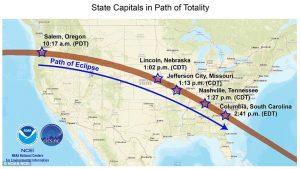
Later in the month, the solar eclipse will be a big event in the USA with scope for some serious propagation experiments. Accessing remote RSPs at different locations is a great way to find out more about the way “Grayline” propagation works. For more on Grayline and Meteor scatter propagation – go to http://www.astrosurf.com/luxorion/qsl-propa5.htm