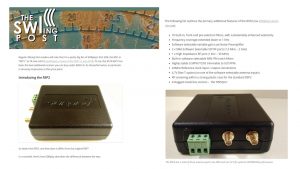
Ham Radio Science reviews the RSP2

Ham Radio Science were one of the first to come out with this comprehensive review of the RSP2 and how it works:
Ham Radio Science were one of the first to come out with this comprehensive review of the RSP2 and how it works:

Earlier this year, Mike Richards wrote this review of SDRuno how it works with RSP1
Mike says ‘Given the excellent value of the RSP from SDRplay, the free availability of the SDRuno software makes this a compelling combination’
The review was supplied courtesy of PW Publishing Ltd. and the copyright is retained by PW Publishing Ltd.
Older blog entries can be found here: http://www.sdrplay.com/blog.html
Links to older reviews can still be be found here: http://www.sdrplay.com/reviews.html
These cover both SDRuno and the RSP1
Take a look at our video which helps explain how SDRuno works, including some of the new features in Version 1.1. released last week:
We are adding more and more links to useful videos covering SDRplay, SDruno, other SDR software, techniques and so on – click here to see the playlists on our Youtube Cannel
Today, we released version 1.1 of SDRuno. New features include a calibrated power measurement facility, an SNR meter and automatic S-meter calibration. There are many additional improvements and fixes. To find out more about all the additional features, documentation can be found on http://www.sdrplay.com/docs/SDRplay_SDRuno_Release_Notes.pdf and the software is available to download from http://www.sdrplay.com/windows.html – For non RSP users (e.g. RTL-SDR and other EXTIO-based SDRs), the bandwidth limit has been increased to 2.5MHz.
Paul Jones and Mike Ladd have worked tirelessly to get the new features documented in an updated version of the SDRuno Cookbook: http://www.nn4f.com/SDRuno-cookbook.pdf
There’s always a lot of debate about Dynamic Range and the performance of the various SDRs out there – Mike Kokotov, Z33T has written an excellent article explaining Dynamic Range and how decimation can improve dynamic range. The article can be found on http://www.qsl.net/z33t/dynamic_range_eng.html